Govern what AI is allowed to understand.
Semantic governance controls information by its meaning, not just where it is stored or who has access. It governs inference, memory and what an AI is permitted to understand and say.
The problem you own
Access control assumes risk lives in the file. AI breaks that assumption. It reads across many sources and reasons over them, so a sensitive conclusion can emerge even when no sensitive file was ever opened. That is inference risk and aggregation risk and traditional, storage-based governance is blind to both.
How it works
Kynexa builds multi-dimensional metadata at two levels: the asset (files, tables, columns, rows) and the element (chunks and memory). Dynamic, context-aware policies: aware of role, intent and sensitivity are then applied during retrieval and context assembly, before the model reasons. Policy acts on meaning, so the same content can be permitted, redacted or blocked depending on who is asking and why.
What you get
Policy by meaning
Govern semantic labels and sensitivity, not just file paths.
Aggregation and inference control
Stop sensitive conclusions assembling from individually-harmless fragments.
Governance of the full context surface
Tools, skills, agents, data and memory, on access, purpose, sensitivity and intent.
Use one AI across many functions
Safely, without fragmenting models or over-restricting access.
Outcomes
Control semantic leakage. Enforce data minimization by default. Give every team one trustworthy AI instead of a dozen narrow, over-locked ones.
FAQ
How a sensitive conclusion gets blocked.
Three individually-permitted fragments can combine into a restricted inference. Kynexa evaluates the aggregation and blocks it before the answer forms.
- Headcount plan (HR) — permitted
- Q3 budget by team (Finance) — permitted
- Project codenames (Eng) — permitted
- Headcount plan (HR) — permitted
- Q3 budget by team (Finance) — permitted
- Project codenames (Eng) — permitted
Policy and semantic metadata.
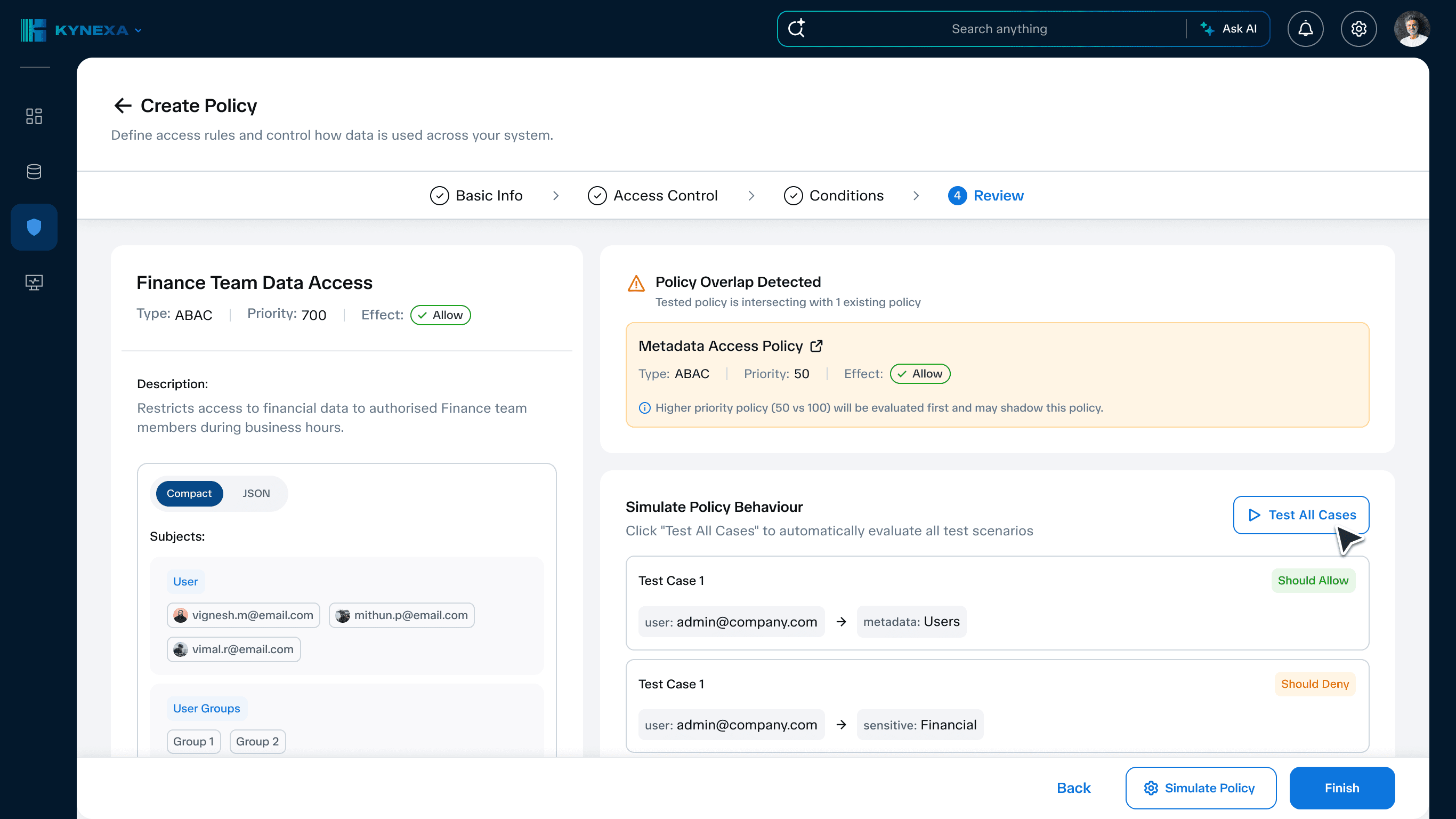
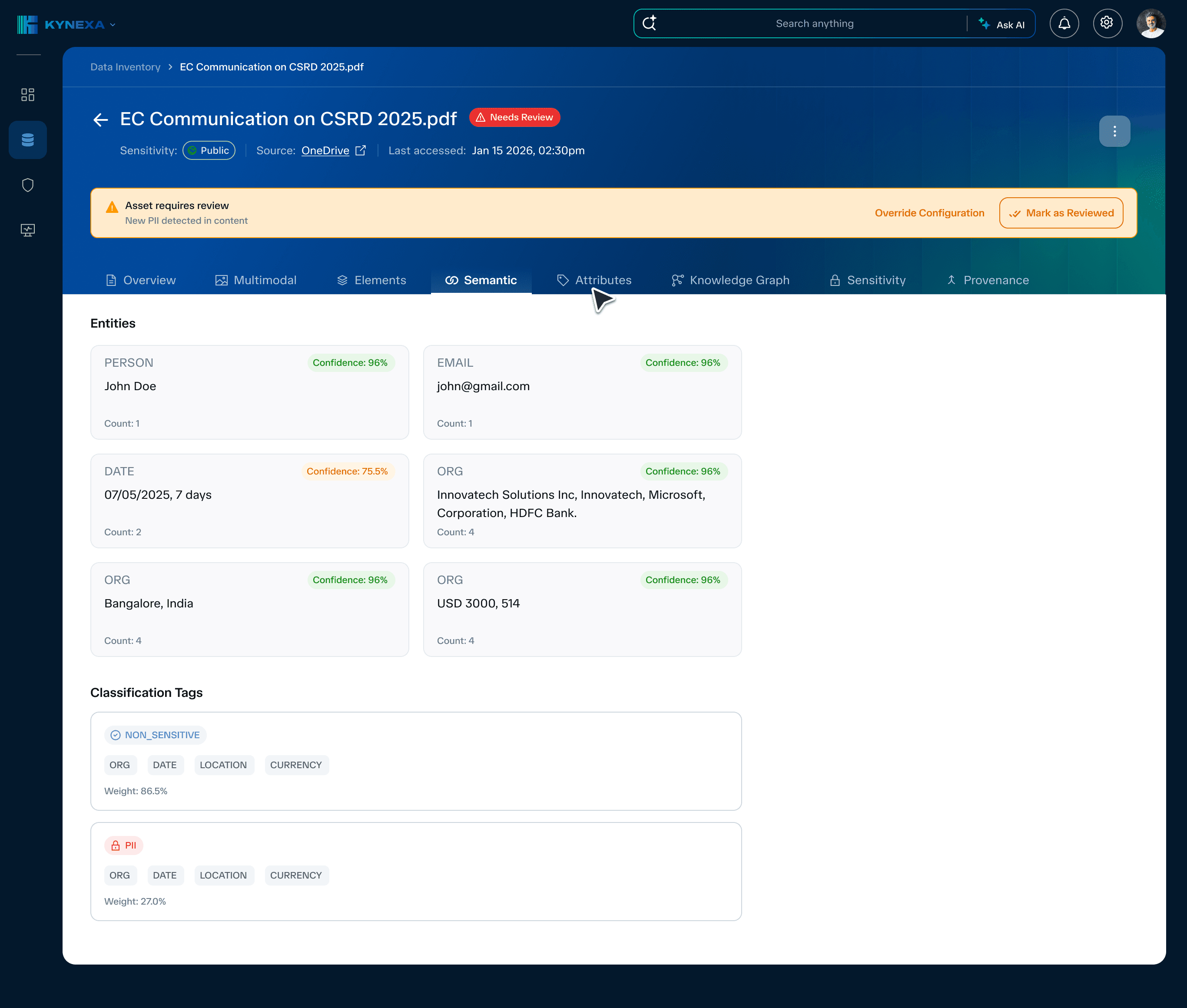
Representative product UI.
See Kynexa govern your AI — in 30 minutes.
Bring a real use case. We'll set up governed retrieval, reasoning and audit on your stack.